What Your Stool Color & Shape Reveal About Your Gut Health
(Why Your Toilet Bowl Is the Most Honest Doctor You’ll Ever Meet)
Table of Contents
THE MOMENT YOU STOPPED PAYING ATTENTION TO YOUR BODY’S MOST HONEST SIGNAL
Most people never realize their body is speaking to them every single day—loudly, clearly, with no filters, no polite euphemisms, and no misleading metaphors. Your body doesn’t send emails. It doesn’t schedule Zoom calls. It doesn’t type out a memo. It sends messages through something far more primitive and far more honest: the stuff you flush down the toilet. That means every morning, every afternoon, or every evening—depending on how your digestive rhythm operates—your body is sliding a report card right under your nose. And most people never look at it. They don’t even glance at it. They flush before they think. They flush before they feel. They flush before they learn.
You can learn more about your health by looking into the toilet for five seconds than you can from hours of scrolling through wellness influencers who don’t know the difference between a microbiome and a microwave. And yet, the average person has been conditioned to treat poop as something shameful, something embarrassing, something you shouldn’t talk about at dinner, at brunch, on a date, or with your doctor—unless something is seriously wrong. But here’s the truth your gut wishes you knew sooner: by the time something is “seriously wrong,” your body has already been warning you for weeks, months, or even years. You simply weren’t listening.
Today is the day you begin listening.
Today is the day you reclaim the lost art of reading the most important daily health metric available to you: your stool color, shape, consistency, frequency, and smell. Not because it’s “fun” or “quirky” or “trendy,” but because your digestive system is the command center of your entire health ecosystem—your immunity, your energy, your metabolism, your mental clarity, your emotional stability, your weight regulation, and your long-term disease risk are all tied to the health of your gut.
And if you want to know the truth about your gut? You don’t need a fancy test.
You don’t need a specialist referral.
You don’t need a medical degree hanging on your wall.
You just need to look.
This post is your crash course in human diagnostics.
It’s your personal, no-fluff, no-filter guide to understanding what the shape, color, and consistency of your stool says about your health—and what to do if the message your gut is sending is one you can’t afford to ignore.
TL;DR SUMMARY (FOR THE SKIMMERS, RUSHERS, AND GOOGLE ROBOTS)
Your poop is the most powerful and reliable daily indicator of gut health, but most people ignore it. Stool color and shape reveal what’s happening in your digestive system—from how well your body absorbs nutrients to whether your microbiome is thriving or inflamed. Brown, smooth, sausage-shaped stools generally signal healthy digestion, while red, black, yellow, pale, or overly mushy stools can point to inflammation, stress, malabsorption, or more serious gastrointestinal issues. Your gut speaks through texture, frequency, color, and smell. When these patterns change, it often means something deeper is shifting inside your digestive system—something you need to understand before it escalates. And yes, your toilet posture dramatically affects stool shape, ease of elimination, and gut health, which is exactly why tools like The PoopSTICK matter more than people realize.
KEY TAKEAWAYS (THE BIG POINTS YOU NEED TO REMEMBER BEFORE WE GO DEEP)
Your poop is a daily diagnostic tool—and ignoring it is like ignoring a smoke alarm. Every color, texture, and shape indicates something about your gut’s performance, dietary habits, microbial diversity, and overall digestive efficiency.
Stool color isn’t random. Brown is normal, green indicates fast transit or microbial imbalance, yellow and pale point to malabsorption, black suggests upper GI bleeding or iron intake, and red can indicate lower GI bleeding.
Shape reveals the story of your gut’s rhythm. Pellet-like stools mean constipation or dehydration. Smooth, soft, sausage-like stools indicate healthy digestion. Mushy or watery stools mean inflammation, irritation, or infection.
Consistency is everything. If it’s hard, you’re dehydrated or deficient in fiber. If it’s too soft, something is irritating your GI system or moving too quickly.
Your toilet posture influences stool formation and evacuation. Modern toilets force a kink in the digestive tract, making elimination harder and more incomplete. A squatting posture—achieved through tools like The PoopSTICK—relaxes the puborectalis muscle and allows cleaner, healthier, more complete bowel movements.
Your gut health is too important to leave to guesswork. Your stool provides the clearest feedback loop you’ll ever get.


THE DAILY REPORT CARD YOU’RE IGNORING: WHY YOUR GUT SPEAKS THROUGH YOUR STOOL
Most people go through life convinced their health is hidden inside lab results, medical charts, or complicated biomarkers. But ask any gastroenterologist and they’ll tell you the same thing: the body leaves clues everywhere, but the most reliable clue—the one that reflects real-time digestive status—is what lands in the toilet. Your stool is, in many ways, the summary statement of everything you consumed, everything you digested, everything you failed to digest, and every battle your immune system fought on your behalf the day before.
If your digestion is slow, your stool will show it.
If your gut microbiome is inflamed, your stool will show it.
If your liver isn’t producing enough bile, your stool will show it.
If your diet is too low in fiber, your stool will show it.
If you’re stressed out of your mind, your stool will absolutely show it.
And yet, most people see stool as waste—something meaningless, something gross, something separate from the self. But the truth, biologically speaking, is almost poetic. Your stool is not waste. It is information. It is data. It is a real-time diagnostic readout of your internal ecosystem, your hormonal balance, your digestive timing, your microbial variety, and your liver function. Every stool sample is a status update from the most important organ system in your body: your gut.
The gut is not just a digestive machine. It is a neurological hub, a biochemical factory, a hormone regulator, and an immune command center. According to Harvard’s Gut-Brain research, nearly 95% of your serotonin (your mood-regulating neurotransmitter) is produced in your gut. The gut hosts over 100 trillion microbes, many of which are responsible for converting nutrients into usable compounds your body depends on for energy, immunity, and metabolic stability. When these microbes are unhappy, imbalanced, or under attack, your stool reflects it instantly.
That’s why stool analysis is one of the first things functional medicine doctors rely on when trying to understand a patient’s health. They aren’t looking at it because it’s “weird.” They’re looking because your stool is a living record of microbial activity, digestive timing, enzyme effectiveness, bile production, nutrient absorption, and intestinal inflammation.
And yet, the average person gives more attention to the weather app than their poop.
The weather app doesn’t keep you alive.
Your gut does.
And it sends messages in brown, green, yellow, red, black, and—if you’re not careful—shades you never want to see.
To understand your health, you must be willing to look at your stool as your body’s most direct, unfiltered conversation with you. And before you dismiss it as overkill or unnecessary, remember this: people who understand their stool understand themselves. People who ignore their stool ignore the early signs of problems that could have been prevented.
Your toilet bowl is your most honest doctor.
And that doctor never lies.

THE RAINBOW IN YOUR TOILET: WHAT STOOL COLOR REALLY MEANS FOR YOUR GUT HEALTH
Color is the most important first clue because it’s the easiest thing to see and the hardest thing to ignore once you know what it means. Stool color isn’t random. It isn’t a coincidence. It isn’t just about what you ate. It’s a direct indicator of how your digestive system processed your food and how your liver, bile duct, pancreas, and microbiome contributed to the outcome.
WHY BROWN IS THE GOLD STANDARD
Brown is normal because your body is producing and using bile properly. Bile is produced in the liver, stored in the gallbladder, and released into the small intestine to break down fats. As bile travels through the digestive tract, bacterial enzymes break it down into compounds that turn stool brown. When your stool is brown, it means:
Your liver is doing its job.
Your gallbladder is releasing bile.
Your microbiome is processing bile salts efficiently.
Your digestive timing is within a normal range.
Brown stool is the digestive equivalent of a thumbs-up.
WHEN GREEN MEANS “SLOW DOWN OR SPEED UP”
Green stool can show up for two very different reasons, which is why understanding context matters. First, green can appear when food moves through the digestive system too quickly. When stool doesn’t spend enough time in the colon, bile doesn’t have enough opportunity to break down into brown pigments, leaving the stool green.
This often happens when:
You’re stressed or anxious (stress accelerates gut motility).
You ate something that irritated your digestive lining.
You consumed a lot of leafy greens or chlorophyll-rich foods.
Your microbiome is imbalanced and not breaking down bile properly.
Second, green can occur when your gut is overwhelmed by a sudden influx of certain foods, supplements, or medications. When the microbiome is destabilized—say, by antibiotics—your stool may turn green because the bile-processing bacteria aren’t doing their job.
Green isn’t usually dangerous, but it is meaningful. It’s a sign your digestive timing may be off or your microbiome may need support.
YELLOW OR PALE STOOL: THE FAT MALABSORPTION WARNING
Yellow stool is one of the clearest red flags in digestive health. When stool is yellow, greasy, or foul-smelling, it typically indicates that fat isn’t being properly absorbed. This can be caused by:
Low bile production
Gallbladder dysfunction
Pancreatic enzyme deficiency
Celiac disease
Intestinal inflammation that interrupts fat absorption
Pale or clay-colored stool is even more serious. This indicates that bile is not reaching the intestine at all—which is often a sign of gallstones, bile duct obstruction, or liver disorders. Pale stool demands prompt medical evaluation. The body cannot survive long without bile flow.
BLACK STOOL: BETWEEN PANIC AND PERFECTLY NORMAL
Black stool can be caused by two opposite things: something completely harmless or something deeply concerning. If you’re taking iron supplements, activated charcoal, or eating dark foods like blueberries or black licorice, your stool may turn black without any danger.
But black stool can also indicate bleeding in the upper gastrointestinal tract. As blood travels through the digestive system, acids and bacteria break it down and turn it black, creating a tar-like appearance known as melena.
If you haven’t eaten anything dark recently and your stool is black, it’s time to see a doctor.
RED STOOL: A SPECTRUM FROM “I ATE BEETS” TO “GO NOW”
Red stool may be caused by harmless things like tomatoes, beets, red gelatin, or food dyes. But bright red blood in the stool—especially if mixed in or coating the stool—can indicate bleeding in the lower GI tract. This can be due to hemorrhoids, fissures, inflammatory bowel disease, polyps, or colorectal cancer.
If your stool looks like a crime scene and you haven’t eaten beets, take it seriously.
WHITE STOOL: THE SILENT SIREN
White or clay-colored stool almost always indicates a lack of bile. This is not normal under any circumstances and requires immediate investigation. It may be caused by bile duct obstruction, liver disease, or complications from medications.
THE MAP OF YOUR GUT: WHAT STOOL SHAPE AND CONSISTENCY REVEAL ABOUT DIGESTIVE HEALTH
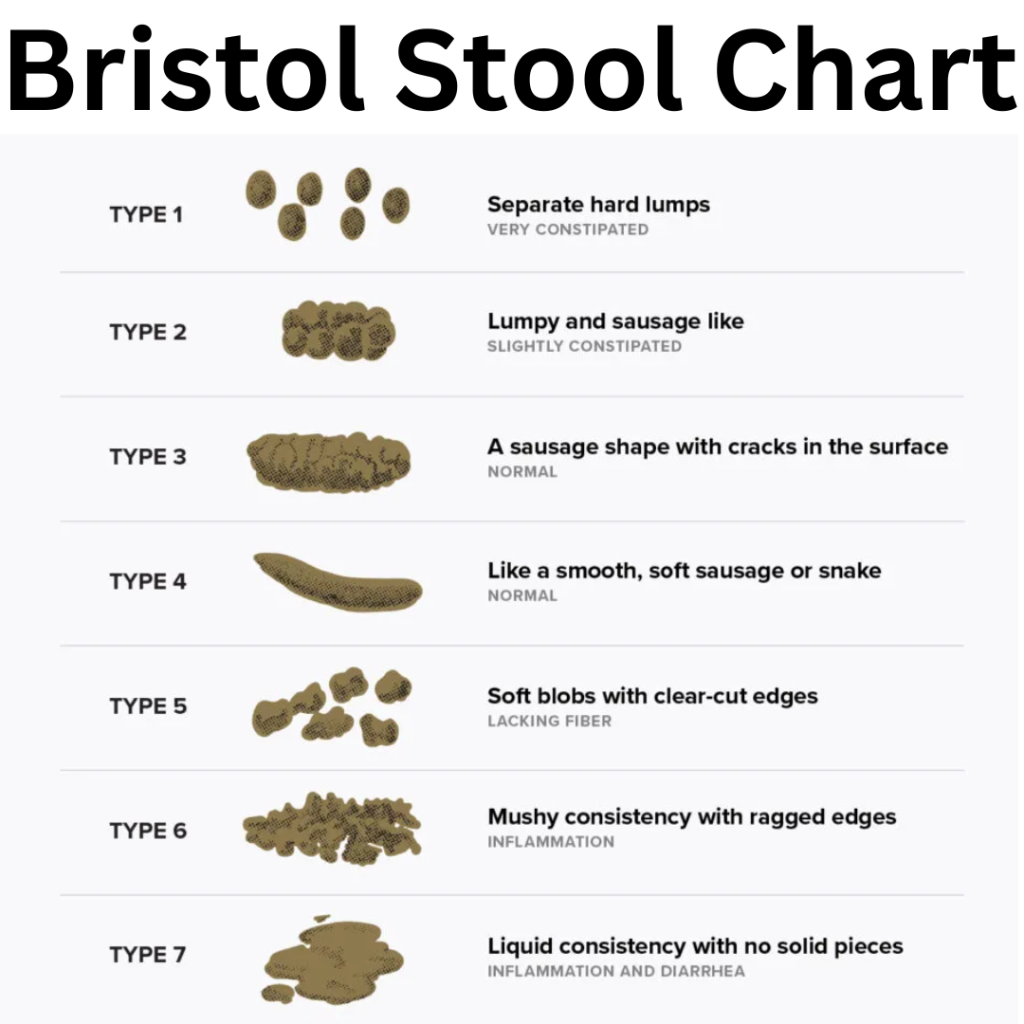
Shape and consistency are the digestive equivalent of body language. They tell the story in detail: not just the what, but the how. While color is the headline, shape is the full article. The Bristol Stool Chart—used globally by doctors—categorizes stool into seven distinct types. But instead of giving you textbook definitions, I’m going to give you the truth behind each one.
TYPE 1 & 2: THE CONSTIPATION SIGNAL
When stool comes out as hard lumps resembling nuts or a sausage that feels like a dry, cracked log, your body is telling you something very clear: slow transit. This is when stool sits too long in the colon, losing water and becoming compacted. It’s a sign of:
Low fiber intake
Dehydration
Stress-induced gut freeze
Lack of microbiome diversity
Poor toilet posture (yes, posture matters more than people think)
Constipation is not just uncomfortable. It’s dangerous. When the colon retains waste longer than it should, toxins reabsorb into the bloodstream, triggering fatigue, bloating, headaches, skin issues, and systemic inflammation. This is why understanding stool shape is not a cosmetic concern—it’s a health imperative.
TYPE 3 & 4: THE SWEET SPOT OF DIGESTION
Smooth, soft, sausage-like stool (Type 4) or a slightly firmer version with cracks on the surface (Type 3) are both signs of healthy digestive timing. It means your stool spent just the right amount of time in the colon—long enough to absorb nutrients and water, but not so long that it turned hard.
People who consistently produce Type 3–4 stool almost always have:
Balanced gut flora
Sufficient dietary fiber
Good hydration habits
Stable nervous system regulation
Healthy bile flow
Better metabolic markers
These are the “perfect poops.” They require minimal effort, come out smoothly, leave you feeling lighter, and rarely require wiping. Yes—if you’re wiping excessively, something’s off.
TYPE 5 & 6: THE SLIPPERY SLOPE OF IRRITATION & INFLAMMATION
These types—soft blobs or mushy stool that lacks form—signal rapid transit and irritation. They often occur when something inflames the intestinal lining or when the microbiome is destabilized. This can be triggered by:
Antibiotics
Food intolerances
Excess alcohol
Artificial sweeteners
Stress hormones
Gut infections
Dietary overindulgence in fat or sugar
These stools come out quickly, often urgently, and leave you feeling like your gut is slightly panicked. That’s because it is.
TYPE 7: THE ALARM SYSTEM
Watery stool is the gut’s way of saying: “Something is wrong, and I need everything out NOW.” It’s a defense mechanism triggered by infection, inflammation, or the presence of something the body perceives as harmful. While occasional diarrhea is normal, chronic episodes require evaluation.

FREQUENCY, SMELL & OTHER IGNORED SIGNS: HOW YOUR BODY WHISPERS BEFORE IT SHOUTS
A healthy gut produces a bowel movement at least once a day. Some people go twice. Some go three times. But anything less than daily elimination means the body is reabsorbing waste it should be releasing. In extreme cases, people mistakenly believe going once every three days is “normal.”
No.
Normal is daily.
Optimal is daily.
Healthy is daily.
Smell is another clue. Stool should have an odor, but ammonia-like, putrid, sulfur-heavy, or rotting smells indicate putrefaction—undigested proteins fermenting in the gut or an imbalance of bacteria.
Chronic bloating, long wiping times, mucus, excessive gas, or urgency are additional signals your gut is giving you long before symptoms escalate.
HOW TO FIX YOUR POOP NATURALLY (AND WHY POSTURE IS THE SECRET NO ONE TALKS ABOUT)
You can’t fix your gut without addressing posture. The modern toilet forces your colon into a kinked position. This creates straining, incomplete evacuation, constipation, and all the downstream problems we’ve discussed. When you squat—or use a tool that simulates squatting—you un-kink the colon, relax the puborectalis muscle, and allow complete elimination.
Complete elimination is the backbone of gut health.
No diet can compensate for incomplete evacuation.
No supplement can fix a mechanical problem.
No probiotic can overcome a kinked colon.
This is exactly why The PoopSTICK exists—to restore the natural posture humans used for thousands of years before modern toilets created modern digestive problems.
Fiber, hydration, stress management, fermented foods, and sleep all matter—but none of it matters as much as creating an environment where your body can actually eliminate effectively.
LISTEN TO THE DOCTOR THAT LIVES IN YOUR TOILET
Your gut speaks to you every day. Poop tells you when it’s happy, when it’s stressed, when it’s inflamed, and when it needs help. Most people ignore the signs until the problem becomes unignorable. But you don’t have to be one of them. You now have the knowledge. You now understand the signals. You now know what your stool color and shape really reveal about your gut health.
The only thing left is action.
If you want a healthier gut…
If you want easier elimination…
If you want “perfect poops” consistently…
If you want to stop straining and start healing…
If you want a microbiome that works for you, not against you…
Then you need to start where real gut health begins: by fixing your posture and restoring complete, natural elimination.
That’s exactly what The PoopSTICK was built for.
It’s not a gimmick.
It’s not a novelty.
It’s a biomechanical necessity.
Your gut speaks through your stool. The PoopSTICK helps your body speak clearly.
👉 Get The PoopSTICK now and experience the healthiest poops of your life.
Your gut will thank you. Your toilet will thank you. Your entire body will thank you.
Join our Email List
About the Author

James
Founder of The PoopSTICK | Gut Health Advocate | Healthcare Pro
I’m James, the guy who talks about poop so you don’t have to (but probably should). With over 12 years of experience in the healthcare world—and a family history of colon cancer which made gut health personal—I created The PoopSTICK to give people a better, more natural way to poop.
After trying almost every pooping gadget, toilet stool, and gut health trend under the sun, I realized most products were uncomfortable, overhyped, or just plain awkward. So I built something better—designed for real humans who want real results.
The PoopSTICK isn’t just a product; it’s part of a movement to take gut health seriously (while still laughing a little). Through our blog, I share natural health tips, poop-positive education, and easy ways to take control of your digestion—because better bowel movements should be a normal part of life, not an embarrassing mystery.
If you're someone who cares about health, wants to feel better naturally, or just wants to poop like a champion, you're in the right place.
Let’s talk sh*t—so you can get rid of it better.
James
Founder of The PoopSTICK | Gut Health Advocate | Healthcare Pro
I’m James, healthcare veteran and gut health advocate on a mission to help you poop better—naturally. With over 12 years in the industry and a personal drive to prevent colon cancer, I created The PoopSTICK after being let down by every “solution” out there.
This isn’t just a stick—it’s a movement (literally). I mix humor, health tips, and real talk to make better bowel movements something we can actually talk about.
Let’s ease your poop!
Past Blog Posts

Is Wheat Wrecking Your Gut? What Celiac Disease Reveals
Wheat isn’t the villain—it’s the kind of wheat that’s wrecking your gut. From ancient grains to modern hybrids, discover how today’s wheat triggers inflammation, worsens celiac symptoms, and sabotages digestion—and what smarter, safer alternatives can finally bring your gut back to balance.
Gut Health and GLP-1: The Hidden Link to Weight and Energy
Your gut isn’t just digesting food—it’s controlling your hunger, energy, and even how fast you burn fat. Inside you is a powerful hormone called GLP-1, and when your gut’s out of balance, it shuts down. Discover how to reactivate this hidden fat-burning axis naturally—no drugs, no gimmicks, just real gut power.

Loaded Water: The Hidden Threat to Your Gut Health
Your gut might be under attack every time you take a sip of water. “Loaded water” — filled with hidden chemicals and disruptors — could be wrecking your microbiome without you even knowing it. Here’s what’s really in your glass, how it affects digestion, and what you can do to fight back.
