Poop & Weight Loss/Gain: How Your Bowel Health Impacts Your Scale

Table of Contents

THE HIDDEN TRUTH ABOUT WEIGHT

The most dishonest moment in your day happens when you step onto a bathroom scale. Not because the scale is wrong—but because what you believe that number represents is wrong. We’ve been programmed to think that every pound reflects fat gain or fat loss, as if our bodies are simple fuel tanks that fill or empty based on yesterday’s decisions. But the truth is far more uncomfortable, far more surprising, and far more empowering once you finally hear it.

Here is the truth no one tells you:
Most people aren’t carrying extra fat. They’re carrying extra stool.

Not a little. Not a pound or two. But five… ten… even twenty or more pounds of retained stool, backed-up waste, undigested food, and slow-moving matter that sits in the colon longer than it should—changing your weight, distorting your stomach, and sabotaging every diet you’ve ever attempted.

There is nothing sexy about this reality. No influencer wants to discuss it. No diet program wants to admit it. No fitness coach wants to acknowledge that your discipline might not be the problem—your digestion is. And yet, stool retention, sluggish motility, methane-producing microbes, and a disrupted microbiome are often the real forces that derail weight loss, inflate your abdomen, and make you believe that your body is failing you when it’s doing everything it can to cope.

Imagine stepping on the scale after a “clean eating” day and gaining two pounds. Most people panic. Most people blame carbs, sodium, or hormones. But the real story is usually much simpler: your intestines didn’t move. Food entered your body, but waste didn’t leave. A pound of dinner became a pound of waste, which became a pound of retained matter, which became a pound of frustration on the scale.

Understanding this isn’t just liberating—it’s transformative. Because once you grasp that your digestive system has more control over your weight than your calorie tracker does, you can finally stop fighting the wrong enemy.

The enemy is not your appetite.
The enemy is not your motivation.
The enemy is not your metabolism.
The enemy is poor bowel function.

Stool retention, microbiome imbalance, and slow intestinal motility distort your weight, destroy your energy, swell your abdomen, hijack your appetite, and quietly sabotage weight loss behind the scenes.

Once you expose that enemy, everything changes.

TL;DR — The Short Version for Skimmers, SEO, and People Reading This on the Toilet

Your scale is lying to you. Not because it’s inaccurate, but because it’s measuring much more than fat. It’s measuring how well—or how badly—you poop. When your gut slows down, waste builds up. When waste builds up, inflammation rises. When inflammation rises, you retain water, develop cravings, store more fat, and feel heavier regardless of what you eat. Improving bowel health, motility, microbial balance, and elimination habits can reduce 3–8 pounds of retained stool within days and dramatically improve long-term weight loss.


Key Takeaways for Busy Readers

If you read nothing else, read this:

Your gut is the command center of your weight. Slow motility, stool buildup, microbial imbalance, and inflammation can make you weigh more, crave more, and store more fat.

Your scale reflects your bowel health far more than your diet. Stool retention can add 3–40 pounds to your body weight—not fat, just waste.

Bloating is not normal. It is often trapped stool, methane gas, or slow-moving intestines.

Fix your gut, and weight loss becomes dramatically easier. Remove the waste, rebalance the microbes, restore motility—and the scale finally makes sense.

Complimentary Better Pooping Guide

THE SCIENCE OF POOP & WEIGHT: WHY YOUR SCALE LIES TO YOU

Every weight-loss “expert” preaches calories in, calories out. Every diet program tells you that weight gain is a discipline problem. Every fitness influencer insists that if you’re not losing weight, you’re simply not trying hard enough.

It’s a convenient lie.
A profitable lie.
But still… a lie.

Because your weight doesn’t only reflect fat.
It reflects what your gut is holding onto.

And most people are holding onto far more than they realize.


How Much Stool Does the Human Body Hold? More Than You Think

Let’s start with the numbers.

A healthy adult with normal digestive motility should carry around 1–2 pounds of stool in the colon at any given time. That is the ideal. That is the goal.

But that is not the reality for most people.

When motility slows—even slightly—the colon begins storing more matter than it should. The longer stool sits, the more water is absorbed from it, the harder it becomes, and the more it sticks to the colon lining. Over days and weeks, this can accumulate shockingly fast:

3–5 pounds of retained stool is common.
5–10 pounds is extremely common.
10–20+ pounds is not rare.
20–40 pounds has been documented in severe cases.

This is not fat.
This is not “water retention.”
This is literal matter your body has not removed.

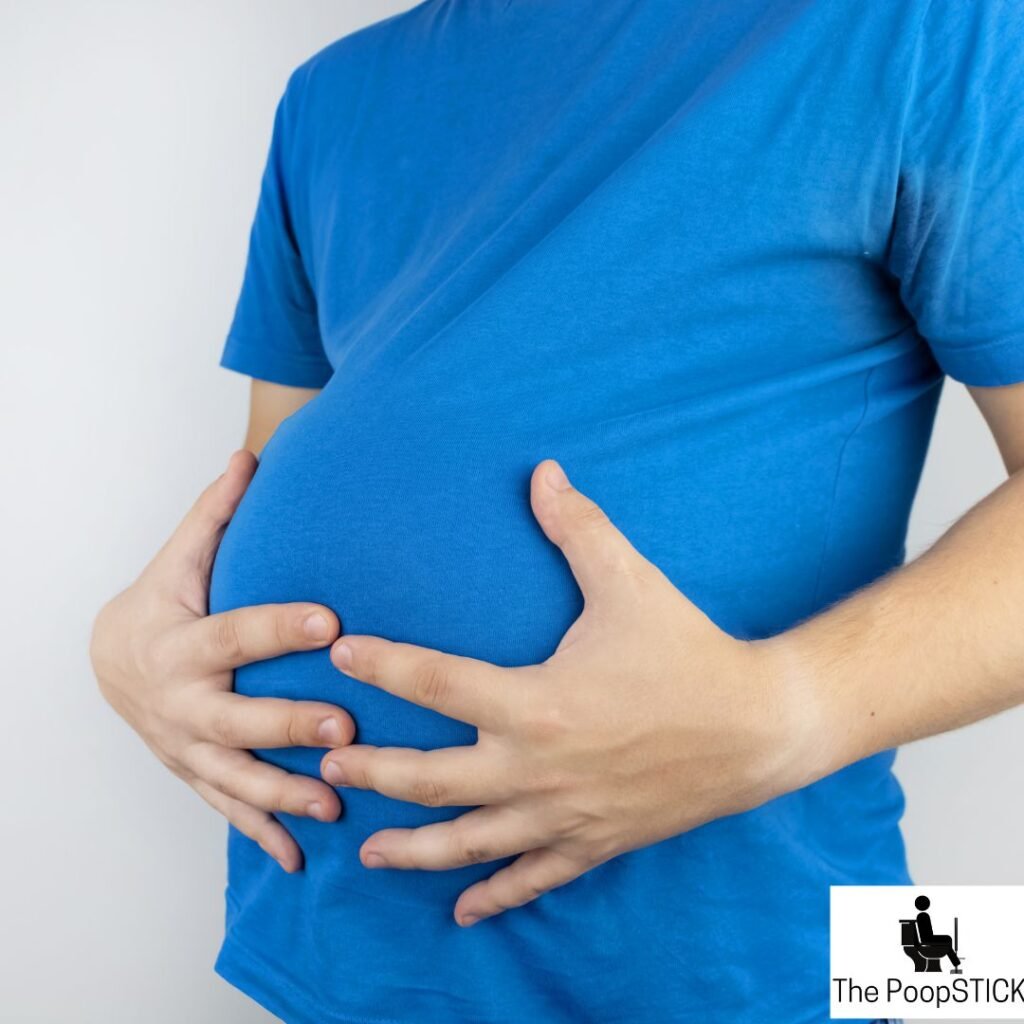
When people say, “I suddenly look 6 months pregnant,” they often aren’t exaggerating. They’re describing a colon swollen with impacted stool, expanding outward through the abdominal wall.


Why Weight Loss Fails When the Bowel Isn’t Moving

Imagine trying to lose weight while storing yesterday’s food inside your gut. Or the food from two days ago. Or the food from last week.

It doesn’t matter how clean your diet is. If elimination is incomplete, your body is still carrying the metabolic burden of that food.

This is why people can:

Eat less
Exercise more
Hydrate well
Cut sugar
Cut alcohol
Track macros
Do all the right things…

…and still watch the scale creep upward.

Your digestion determines your actual weight trend—not your calories. Calories matter, of course, but only if your gut is able to eliminate waste efficiently. When waste stays inside you, your body experiences:

  • Increased inflammation

  • Increased water retention

  • Increased gas

  • Increased abdominal pressure

  • Increased fermentation

  • Increased bloating

  • Increased stress hormones

These factors drastically distort your scale number.


Modern Toilet Posture: The Silent Enemy of Weight Loss

One of the most overlooked reasons people retain stool is something incredibly simple: the modern toilet.

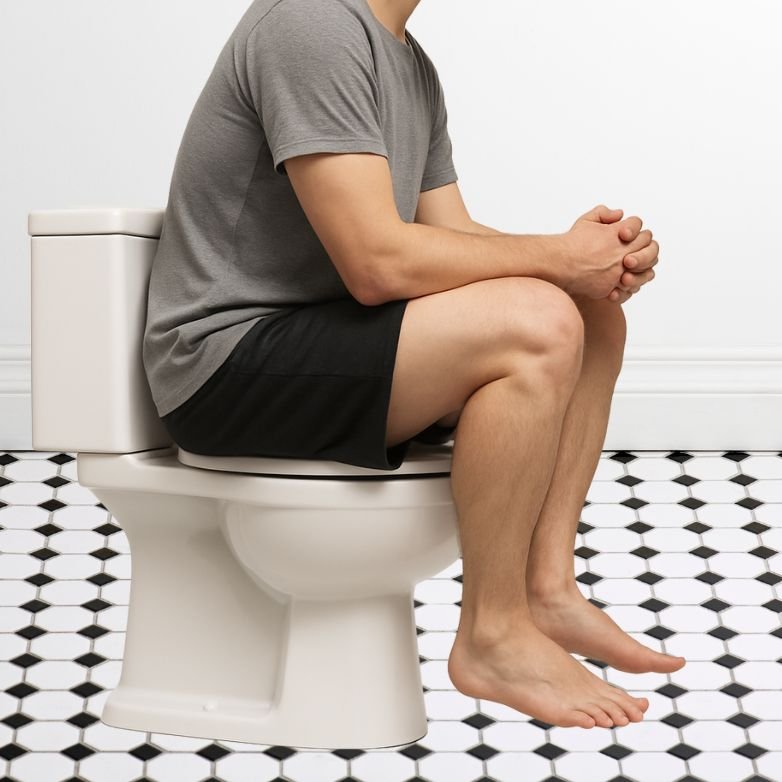
When humans switched from squatting to sitting, a problem was created. The sitting posture puts a 90-degree kink in the anorectal canal, making complete evacuation nearly impossible for most people.

Partial elimination becomes the new normal.
A little stool stays behind.
Tomorrow, a little more stays behind.
Next week, the residue becomes hard.
Next month, your colon stores pounds of waste.

This is why so many people feel “lighter” after using a squatting device. It’s not psychological—it’s anatomical.

When the anorectal angle straightens, the colon empties more fully. Complete evacuation reduces retained stool, reduces bloating, reduces gas, reduces inflammation, and immediately reduces weight on the scale.

This isn’t theory. This is basic physiology.


Why the Scale Lies: A Daily Example

Let’s say you eat:

1 pound of food today
½ pound of water and beverages
½ pound of digestion byproducts

That’s 2 pounds of total intake.

If your bowel moves normally, you eliminate 1–2 pounds per day.

But if motility slows?

You may eliminate only half a pound.
That means 1.5 pounds stays behind.

Repeat that for seven days.
You’ve retained more than 10 pounds of matter—not fat, not muscle, not water—just waste.

And this is why people feel “massive” at night and lighter in the morning. It’s the movement—or lack of movement—inside the colon.

GUT MOTILITY: THE REAL METABOLISM NO ONE TALKS ABOUT

When people say “metabolism,” they think about fat burning. They imagine calories being turned into energy or stored on the hips. But the most immediate and most impactful part of your metabolism is not how you burn calories—it’s how you move matter.

Gut motility is the silent driver of your weight.
It’s the hidden variable.
The invisible force that explains why you can gain 3 pounds overnight without gaining a single ounce of fat.

Let’s break down why motility determines everything.


Slow Motility = Slow Weight Loss

When food enters your body, there’s a window of time in which your body breaks it down, absorbs nutrients, and then eliminates the leftover matter. If the process is fast, waste leaves the body before it becomes a problem. If the process is slow, waste lingers long enough to interfere with:

  • Hormone regulation

  • Gas production

  • Appetite

  • Cravings

  • Inflammation

  • Belly size

  • Energy levels

  • Fat storage

And yes—your scale.

Slow motility is not just an inconvenience. It fundamentally changes how your body functions.


The Constipation–Infection–Inflammation Loop

Slow motility doesn’t remain slow. It progressively worsens through a biological feedback loop:

Step 1 — Stool moves slowly.
The colon absorbs more water. Stool becomes harder.

Step 2 — Hard stool stretches and irritates the colon.
This triggers inflammation.

Step 3 — Inflammation disrupts nerve function.
Nerves control motility. When inflamed, they signal more slowly.

Step 4 — Reduced nerve function slows motility even more.

This loop repeats daily.

This is how occasional constipation becomes chronic constipation.

This is how chronic constipation becomes bloating, distention, gas, and visible belly expansion.

And this is how belly expansion becomes weight gain.


The Methane Problem: How Gas Makes You Gain Weight

This one surprises people.

Methane gas—produced by certain gut microbes—literally slows intestinal transit. It’s not just discomfort. It’s not just “stinky gas.” It is a chemical compound that paralyzes motility. In fact, studies show that people with methane-dominant guts have slower transit times and higher BMIs.

Why?

Because methane interferes with the movement of the bowels. When your intestines aren’t moving, stool gets stuck. And when stool gets stuck, you gain weight—not because of fat, but because matter isn’t leaving your body.

This is why:

  • Low fiber diets

  • Low movement days

  • Stressful weeks

  • High protein meals

  • Antibiotic use

  • Artificial sweeteners

  • Low-carb diets

…can all trigger methane overgrowth.

When methane rises, motility drops. When motility drops, stool stays. When stool stays, weight rises.


How Motility Controls Appetite, Hormones, and Cravings

This is the part no one expects.

Slow-moving intestines suppress some hormones and exaggerate others:

  • Ghrelin spikes, increasing hunger

  • Leptin drops, decreasing fullness

  • GLP-1 decreases, slowing metabolism

  • Cortisol rises, encouraging fat storage

  • Insulin spikes, promoting abdominal fat

In other words, when your gut slows down, your ability to lose weight slows down too.

You crave more.
You feel hungrier.
You store more fat around the waist.
You experience more bloating.
You think you’re “falling off track” when really your gut is just stuck.

Your gut controls your appetite far more than your brain does.

The Microbiome–Weight Connection

If you’ve ever felt like your weight “fights back” no matter what you do — strict diet, more cardio, fewer carbs, more protein — you’re not imagining it. The microbiome literally resists weight loss when it’s out of balance. These microbes have one job: survive. They don’t care about your swimsuit season, your confidence, or your doctor warning you about metabolic syndrome. When the wrong bacteria dominate, they manipulate hunger hormones, slow digestion, intensify cravings, and drive you toward the very foods that keep them alive… not the ones that help you lose weight. And yes — this is why certain people can “eat clean” and experience zero scale movement. Because the truth you were never told is simple: you’re not eating for one. You’re eating for trillions.

This is where the weight-loss industry gets exposed. They tell you weight is a simple math equation — calories in, calories out — because it’s easy to package, easy to sell, and easy to blame the customer when it fails. But the newest research continues to hammer the same point: people with stubborn weight typically have a stubborn microbiome. Not broken. Not weak. Not lazy. Simply miswired by years of stress, antibiotics, ultra-processed food, constipation, poor sleep, low fiber, binge-restrict cycles, and inflammation. In fact, Harvard’s microbiome research shows that people with weight-loss resistance have different bacterial fingerprints than people who stay lean effortlessly. That’s not willpower — that’s biology.

And here’s the kicker most gurus don’t want you to know: your microbiome actually changes how many calories you absorb from the same food. Two people eat the same sandwich. One extracts 70% of the calories. The other extracts 90%. Same food. Same portion. Completely different outcome. And the person absorbing more calories usually has slower gut motility, more constipation, and more fermentation in the colon. Translation? If your poop schedule is off, your calorie absorption isn’t just different — it’s amplified.

This explains why stool retention and sluggish transit time aren’t “minor digestive annoyances.” They’re metabolic handbrakes. They trap waste longer in the colon. They allow more calories to be pulled out. More toxins to recirculate. More inflammation to spread. More gas and water retention to build up. Which means your scale is reflecting things your diet app doesn’t even measure. (This is also where you link to a gut basics post — insert: LINK TO RELATED POST.)

The emotional consequence is real and corrosive. People blame themselves for not losing weight — meanwhile their microbiome is stubbornly holding the line. Think about how ridiculous this is: we’ve built an entire cultural identity around weight loss being a matter of character… while completely ignoring the invisible metabolic decision-makers running the show behind the scenes. When the right bacteria flourish, your gut becomes a calorie-burning, hunger-regulating machine. When the wrong bacteria dominate, your gut becomes a fat-storage, appetite-sparking, bloating factory.

And this is why the “poop–weight connection” matters. Because every time stool sits in your colon too long, it fuels bacterial imbalance. And every time your microbiome is out of balance, your metabolism works against you. You’re fighting a battle you didn’t even know you were in — and losing, not because you lack discipline, but because no one taught you how to fix the battlefield conditions. So the question becomes simple: what happens when you finally remove the blockages, rebalance the bacteria, and correct your gut motility? The answer is equally simple: your body stops fighting you — and finally starts cooperating.

Take your Bathroom Experience to a whole new Level!

Get The PoopSTICK Today!

The Stool Retention Problem (And Why It Makes You Look Heavier Overnight)

The Weight You Didn’t “Gain” — You Just Haven’t Eliminated

Let’s call out the elephant in the room. Or rather, the elephant in your colon. Most people walking around right now — people in your office, people at the gym, people in your home — are carrying three to ten pounds of retained stool without realizing it. That’s not a random statistic; it’s documented in gastroenterology literature and confirmed by radiographic imaging. You can eat correctly, count every gram of protein, hit your calorie target, and run five miles a day — but if stool is sitting inside you like a brick of toxic luggage, your scale will not reveal your true body weight.

Of course, no one wants to talk about this. It’s not glamorous. It’s not sexy. But it’s real. And your gut doesn’t care about social taboo. It cares about physics. Stool in = stool must come out. When it doesn’t? Your abdomen expands. Gas builds up. Water retention increases. Your waistline thickens. Your lower belly looks permanently “puffy.” You check the mirror and swear you gained fat — but you didn’t. It’s internal buildup, not adipose tissue. And this is exactly where millions of people misinterpret their body changes and sabotage their progress by making the wrong adjustments.

Here’s the brutal truth: you cannot out-diet constipation. You cannot out-exercise slow motility. When stool sits too long, it pulls water from the colon, making the mass harder, drier, and more difficult to move. The harder it becomes, the slower the motility becomes. The slower the motility, the more fermentation happens. The more fermentation, the more bloating and distention occur. This is why someone can wake up in the morning with a “flat” look and by afternoon feel like they’ve gained ten pounds. They didn’t. Their motility simply slowed. Their transit time extended. Their stool compacted. And the internal pressure created the illusion of weight gain.

Let me give you a real-world story — a true “Challenge → Action → Result” case. A 42-year-old woman, high-achieving executive, works out five days a week, eats clean, sleeps decently, but can’t lose the last 15 pounds. She’s convinced it’s age. Hormones. Genetics. Maybe stress. She cuts carbs harder. She adds another mile to her run. Nothing budges. Finally, a GI specialist orders abdominal imaging. The diagnosis? A colon filled with retained stool — up to her mid-descending colon. Not only was she constipated… she didn’t even feel constipated. This is common: many people think a poop every two or three days is “normal” because it’s all they’ve ever known.

The action step was simple: hydration correction, magnesium, a posture-assisted toilet stool, daily fiber from whole foods, and a probiotic strain optimized for motility. The result? Seven pounds gone in nine days — without changing her diet. She didn’t suddenly burn body fat; she just eliminated what had been trapped inside her. Her stomach flattened. Her energy returned. Her hunger normalized. Her skin improved. And only then did her real weight-loss journey begin.

This is why weight-loss resistance often isn’t fat-loss resistance — it’s bowel-movement resistance. Your colon is a storage system, not a trophy case. When waste doesn’t exit, everything else becomes harder: hormone regulation, mood balance, microbial diversity, nutrient absorption, appetite signaling, and metabolism itself. (This is the perfect place to crosslink to an article about healthy elimination — insert: LINK TO RELATED POST.)

So let’s erase the shame around this topic. You’re not “gross.” You’re not “broken.” You’re dealing with a biological backup that nearly half the population deals with — but almost no one addresses directly. And until you clear that internal pressure, your scale will continue to lie to you. But remove it? Suddenly everything feels easier. And lighter. And more predictable. Because the truth is: you can’t lose weight in a body that still hasn’t let go of what it’s holding onto.

Gut Motility — The Hidden Dial That Controls Your Metabolism

Why Slow Transit Time Is the Silent Killer of Weight Loss, Confidence, and Energy

Gut motility is the unsung hero — or the silent saboteur — of your weight-loss journey. Most people never think about it, never measure it, never track it, and never even consider it could be the thing holding them back. But here’s the reality: motility controls everything. It controls how quickly food moves from your stomach to your small intestine. It controls how effectively nutrients are extracted. It controls how efficiently waste is eliminated. When motility speeds up, your metabolism becomes more efficient. When it slows, everything grinds down with it.

And yes — this directly influences your weight. Slow motility means food sits longer, calories absorb more completely, fermentation increases, toxins linger, inflammation rises, and hunger cues get scrambled. Your body becomes a confused, sluggish machine that’s trying to operate on half-power. And like any machine stuck in low gear, it struggles, burns out faster, and produces poor results.

What people misunderstand is that motility isn’t just a digestive factor — it’s a metabolic factor. You could think of it as your body’s internal conveyor belt. When that belt moves at the right speed, everything flows: digestion, nutrient distribution, energy production, elimination. When it moves too slowly, the conveyor becomes a bottleneck. And the bottleneck becomes a crisis. And the crisis becomes weight gain, fatigue, bloating, mood swings, and the dreaded “skinny-fat” phenomenon where the body holds fat despite looking reasonably lean in clothing.

Your gut has its own nervous system — the enteric nervous system — often called “the second brain.” It controls motility, and it communicates nonstop with your actual brain. Stress slows motility. Poor posture slows motility. Sedentary lifestyles slow motility. Diets low in fiber and high in processed foods slow motility. Chronic dehydration slows motility. And worst of all? Habitual stool-holding — something people do far more than they admit — rewires your motility rhythms and trains your colon to respond only under extreme pressure.

But here’s where things get empowering. Motility is fixable. Trainable. Reversible. You can reset it like a thermostat — but only if you understand the inputs. Hydration sets the stage. Fiber builds the bulk. Magnesium relaxes the pathway. Stool posture tools (like The PoopSTICK — yes, your product) straighten the anorectal angle, which increases elimination speed and reduces straining. Daily movement stimulates peristalsis. And stress management grounds the gut-brain axis so the body feels safe enough to release waste instead of clenching.

You don’t need gimmicks. You don’t need detox tea scams. You need biology working the way it was designed to work. And once you restore that — once you create predictable, efficient motility — weight becomes easier to manage. Hunger normalizes. Cravings decrease. And your energy returns with an intensity you forgot was possible. It’s not magic. It’s physiology finally working in your favor.

Stool Retention, Bloating, and Body Composition — The Real Cause of Belly Fat Appearance

Why Your Belly Isn’t Fat… It’s Full

Let’s cut to the truth: most people look at their belly and see a personal failing. They see “fat” and assume it’s from poor diet or lack of exercise. But nine times out of ten, what they’re actually seeing is retained stool and bloating, amplified by slow motility and microbial imbalance. Your body is not “bad” or “lazy.” It’s simply holding onto what it can’t expel efficiently.

Retained stool physically stretches the colon. This expansion is not subtle — it pushes on surrounding organs, triggers water retention, and increases inflammation. Combined with gas from fermentation, it inflates your midsection, creating a visual illusion of fat even when the underlying fat layer hasn’t changed. This explains why people can lose inches on their waist immediately after their colon empties. They haven’t lost pounds of fat overnight — they’ve eliminated what should never have been there in the first place.

And here’s the kicker: retained stool doesn’t just distort appearance. It disrupts internal chemistry. Waste sitting too long in the colon releases endotoxins, promoting low-grade systemic inflammation. Inflammation signals your body to hold onto fat, especially around the visceral area — the dangerous fat around your organs. So the more stool you retain, the more your body misinterprets your internal state, the more it clings to energy reserves, and the harder it becomes to lose actual fat.

This is why waistline measurements, mirror checks, and even clothes feel like more accurate indicators than the scale itself. After clearing internal blockages, many people experience the “aha” moment: three to eight pounds gone in days, a flatter belly, better digestion, and renewed energy. This is not placebo. It’s not luck. It’s physics and biology working exactly as they were designed. The colon finally empties. Gas dissipates. Water balance corrects. And the belly you’ve been blaming yourself for? Suddenly you see progress that’s been waiting inside your gut the whole time.


Daily Habits That Contribute to Retention

Bloating and retention are almost always lifestyle-driven. It isn’t that your body is “broken.” It’s that you’ve trained your gut to operate inefficiently:

  • Ignoring the urge to go – Holding stool desensitizes colon nerves.

  • Low-fiber diets – Fiber provides the bulk and movement necessary for motility.

  • Sedentary habits – Movement stimulates peristalsis; sitting too long slows transit.

  • Stress – Stress hormones constrict the colon and slow elimination.

  • Poor posture on the toilet – The 90-degree angle prevents full evacuation.

Every missed bowel movement compounds the problem, creating a vicious cycle that masquerades as fat gain. But the solution is also habit-driven: reversing each of these factors systematically can drastically improve appearance, energy, and scale readings in just days.

Fixing Your Gut to Fix Your Weight — The Step-By-Step Action Plan

Practical Steps to Reclaim Your Scale, Shape, and Health

Enough theory. Let’s move to action. Here’s how to fix your gut, restore motility, rebalance the microbiome, and finally make your scale a reflection of your efforts rather than a source of frustration.


Step 1 — Correct Toilet Posture

The simplest, most overlooked fix is squat-assisted elimination. Tools like The PoopSTICK or a basic footstool straighten the anorectal angle, making bowel movements easier and more complete. Aim for a natural squatting posture every time you go. Don’t rush. Take a few deep breaths and allow your colon to empty fully.


Step 2 — Hydration

Water is critical. Without adequate hydration, stool becomes hard and difficult to pass. Men need roughly 3 liters per day, women 2.2 liters — with adjustments for exercise and climate. Hydration softens stool, encourages smooth transit, and reduces inflammation.


Step 3 — Fiber and Food Choices

Not all fiber is equal. Incorporate:

  • Soluble fiber (oats, chia, flax) to retain moisture and create smooth bulk

  • Insoluble fiber (vegetables, leafy greens) to push matter along

  • Fermented foods (kimchi, sauerkraut, kefir) to feed beneficial microbes

  • Avoid ultra-processed foods that slow motility and feed harmful bacteria

Aim for 25–35 grams of fiber daily. Increase gradually to prevent gas overload.


Step 4 — Microbiome Support

Your gut flora decides your metabolic fate. Consider:

  • Probiotics targeting motility and fermentation control

  • Prebiotics like inulin, garlic, onions, and asparagus to feed beneficial bacteria

  • Reducing sugar, artificial sweeteners, and refined carbs that promote methane-producing microbes

Balance is key. Overloading with probiotics or prebiotics without proper motility support can worsen bloating temporarily.


Step 5 — Gentle Daily Movement

Exercise is not about burning calories alone. Movement stimulates intestinal contractions. Walking, yoga, or light resistance training for 20–30 minutes daily keeps the gut active and helps regulate transit time. Even a brisk 10-minute post-meal walk can significantly improve motility.


Step 6 — Stress Management

Cortisol slows the gut. Chronic stress disrupts the gut-brain axis, suppresses motility, and exacerbates cravings. Techniques such as deep breathing, meditation, short breaks, or mindfulness exercises help signal your gut that it’s safe to release.


Step 7 — Optional Supportive Supplements

Magnesium citrate or magnesium glycinate can soften stool and support nerve signaling in the colon. Digestive enzymes and bile support nutrient absorption and reduce fermentation. Use only as needed and under professional guidance.


Step 8 — Track and Celebrate Progress

  • Monitor bowel consistency and frequency

  • Watch for reductions in bloating and waist circumference

  • Record energy levels, hunger cues, and mood

Consistency beats perfection. Small, incremental wins compound over time.

TAKE CONTROL OF YOUR GUT, AND YOUR SCALE WILL FOLLOW

Here’s the no-fluff truth: your scale, your waistline, your energy, and your cravings are directly controlled by your gut. Stop blaming yourself. Stop over-restricting. Stop punishing your body for biology that’s been ignored. Take the practical steps outlined above, start seeing results in days, and reclaim the body you deserve.

Your gut holds the power. The choice is yours: continue fighting an invisible enemy… or finally give your body what it needs to cooperate. Start today:

  • Correct your posture

  • Hydrate consistently

  • Feed your gut the right fiber

  • Support your microbiome

  • Move daily

  • Reduce stress

Do this. And watch your scale stop lying to you. Watch your belly flatten. Watch energy return. Watch cravings normalize. Watch confidence explode.

Because weight loss isn’t just about discipline or calories.
Weight loss — real, lasting weight loss — starts in your gut.

Stop struggling. Start moving. Start pooping.
Your scale will finally tell the truth.

Join our Email List

About the Author

Picture of James

James

Founder of The PoopSTICK | Gut Health Advocate | Healthcare Pro

I’m James, the guy who talks about poop so you don’t have to (but probably should). With over 12 years of experience in the healthcare world—and a family history of colon cancer which made gut health personal—I created The PoopSTICK to give people a better, more natural way to poop.

After trying almost every pooping gadget, toilet stool, and gut health trend under the sun, I realized most products were uncomfortable, overhyped, or just plain awkward. So I built something better—designed for real humans who want real results.

The PoopSTICK isn’t just a product; it’s part of a movement to take gut health seriously (while still laughing a little). Through our blog, I share natural health tips, poop-positive education, and easy ways to take control of your digestion—because better bowel movements should be a normal part of life, not an embarrassing mystery.

If you're someone who cares about health, wants to feel better naturally, or just wants to poop like a champion, you're in the right place.

Let’s talk sh*t—so you can get rid of it better.

Picture of James

James

Founder of The PoopSTICK | Gut Health Advocate | Healthcare Pro

I’m James, healthcare veteran and gut health advocate on a mission to help you poop better—naturally. With over 12 years in the industry and a personal drive to prevent colon cancer, I created The PoopSTICK after being let down by every “solution” out there.

This isn’t just a stick—it’s a movement (literally). I mix humor, health tips, and real talk to make better bowel movements something we can actually talk about.

Let’s ease your poop!

Past Blog Posts

Is Wheat Wrecking Your Gut? What Celiac Disease Reveals

Wheat isn’t the villain—it’s the kind of wheat that’s wrecking your gut. From ancient grains to modern hybrids, discover how today’s wheat triggers inflammation, worsens celiac symptoms, and sabotages digestion—and what smarter, safer alternatives can finally bring your gut back to balance.

Gut Health and GLP-1: The Hidden Link to Weight and Energy

Your gut isn’t just digesting food—it’s controlling your hunger, energy, and even how fast you burn fat. Inside you is a powerful hormone called GLP-1, and when your gut’s out of balance, it shuts down. Discover how to reactivate this hidden fat-burning axis naturally—no drugs, no gimmicks, just real gut power.

Loaded Water: The Hidden Threat to Your Gut Health

Your gut might be under attack every time you take a sip of water. “Loaded water” — filled with hidden chemicals and disruptors — could be wrecking your microbiome without you even knowing it. Here’s what’s really in your glass, how it affects digestion, and what you can do to fight back.

Join our Waitlist

Get notified first when Pre-orders are ready! Plus! Get specials and discounts for waitlist members only!

Stop Straining. Start Living

Discover the top 8 mistakes people make with toilet stools and how a simple change can lead to effortless relief. Download your free guide now.

You may already have

Happy Poops.

What about your friends?

Help us improve the health of others.
share our page with them.